CloneWorks began the way most meaningful things begin. Not with a business plan, but with a question I could never stop asking.
Why do good businesses fail for problems that should already be solved?
Not because they built the wrong product.
Not because they lacked talent.
Not because they stopped caring.
But because somewhere along the way, operating the business became harder than building it.
For years I watched talented founders spend more time managing software than serving customers. Great teams were buried beneath disconnected tools, repetitive work, and operational friction that slowly drained their time, energy, and momentum.
The more businesses I observed, the more convinced I became that the problem was rarely the people.
It was the system surrounding them.
That never made sense to me.
Long before CloneWorks existed, I was searching for it myself. I hoped someone else had already built the operating system I imagined. I found powerful software. I found impressive automation. Platforms like HubSpot and GoHighLevel solved individual problems well. But every solution still required me to move between different systems just to operate one business. One platform for marketing. Another for content. Another for analytics. Another for hiring. Another for communication.
The software kept getting smarter.
The people using it were not getting freer.
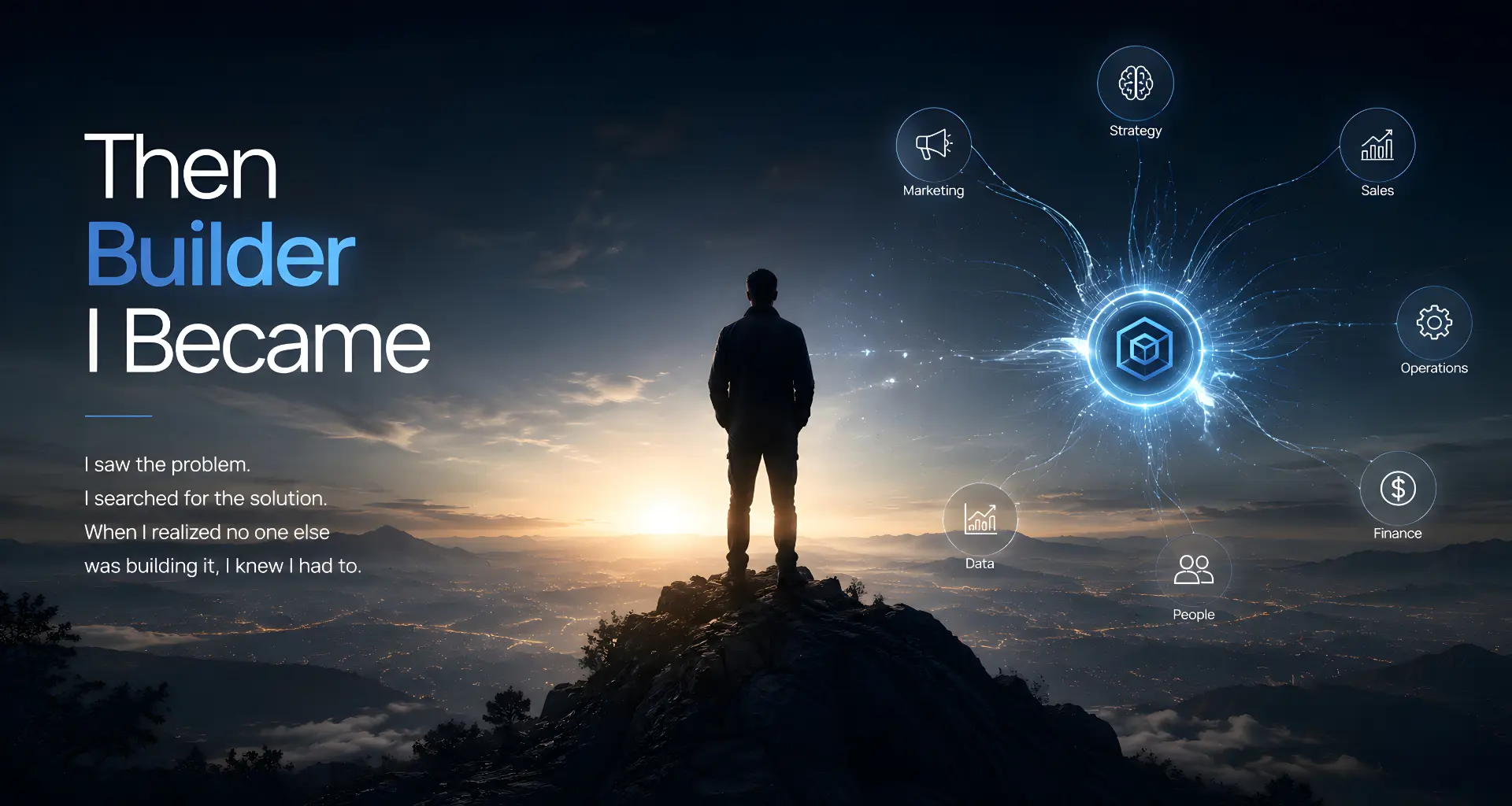
That was the moment CloneWorks stopped being an idea and became a responsibility.
I realized I was no longer asking why someone had not built it.
I was asking why I had not.
I never set out to become the founder of an AI company.
I set out to build the operating system businesses have never had.
Artificial intelligence is simply what finally makes that possible.
For decades, businesses have been forced to assemble themselves from disconnected software, hoping enough integrations would eventually feel like one system. They never did. Every new tool solved one problem while creating another. The stack grew. The complexity grew. The burden stayed with the people.
CloneWorks was never meant to become another application inside that stack.
It was designed to replace the stack itself with one intelligent operating layer that understands the business, learns from it, and helps it execute.
I do not come from Silicon Valley, and I do not have an elite university behind my name. I left school young, got married at sixteen, and learned by doing. Throughout my career I earned trust by solving problems, taking responsibility, and refusing to stop learning. Every challenge became another skill. Every unknown became another question worth answering.
At fifty, I am learning faster than I ever have because I have learned that knowledge only matters when it is applied. That philosophy has shaped CloneWorks from the beginning. Every lesson has become another improvement to the platform. Every obstacle has become another opportunity to remove friction.
People sometimes assume confidence comes from believing you will never fail.
Mine comes from believing every meaningful problem has an answer.
Sometimes we have not found it yet.
Sometimes we have not asked the right question.
But the answer exists.
That belief has guided every decision we have made.
At its heart, CloneWorks is not about artificial intelligence.
It is about people.
The people behind businesses.
The families who depend on them.
The employees building their careers.
The communities those businesses support.
Technology should give them back their time, their clarity, and the freedom to focus on meaningful work instead of managing software.
If CloneWorks succeeds, I do not hope people remember us because we built remarkable AI.
I hope they remember that we built the operating system businesses should have had all along.
One that gave people back their time.
Their focus.
Their freedom.
And the opportunity to build something that mattered.
When I realized no one else was building that future, I knew it would be selfish not to try.